Wednesday, 22 May 2013

Here’s Your New Xbox One: Microsoft’s All-In-One Home Entertainment System


62
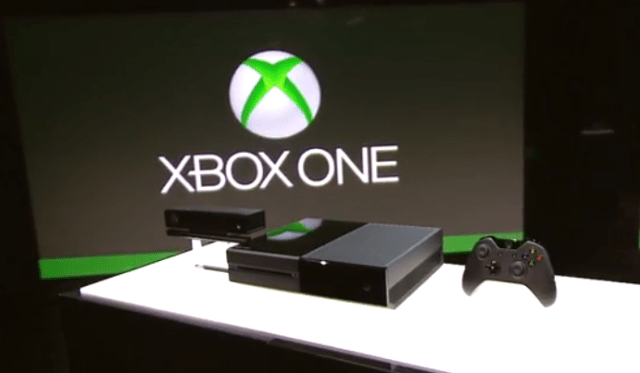
Microsoft has revealed its new Xbox, the successor to the Xbox 360. It’s a next-generation console, with plenty of power under the hood, but it’s also clearly about consolidating your digital entertainment and operate as much more of a lifestyle device.
“Where all of your entertainment comes alive in one place,” is how Microsoft’s Don Mattrick put it on stage during his introduction. The entire event was prefaced with a description of the various types of non-game media that’s becoming popular with online streaming set-top boxes and mobile devices. “To continue to lead, we must provide compelling answers to new questions,” Mattrick said.

“Design and build an all-in-one system to light up a new generation of games, TV and entertainment,” in a way that’s “simple, instant and complete” is how he characterized the mission for the new device.

VOICE CONTROL

Kinect is part of the package, and it’s a voice controlled experience from power on throughout the entire process. Your voice cues the Xbox to your user profile and sets up all your custom options. Then, you can dictate activities to Xbox One, sort of like how many imagined Apple would do their own Apple TV with Siri.
Changing between activities is as easy as telling the Xbox One exactly what you want it to be doing. It’s remarkably quick, quicker even than the process of changing channels on my at-home cable box hardware. But voice control isn’t the only trick, there’s also gesture recognition tech for controlling the system with your hands.

SNAP MODE

132
There’s a “Snap Mode” feature, too, which looks like the Microsoft Windows 8 experience, in that it allows you to run two activities simultaneously. So you can watch a movie and then also browse the Internet at the same time, for example, to look up elements of that film. You can even use Skype, newly introduced to Xbox with the Xbox One, and have that running in Snap Mode too.
The Snap Mode feature does something that has until now mostly been reserved for computers and for mobile and tablet devices: provides a second-screen experience that runs right alongside things like live TV. Adding basically a HUD layer to live TV might be the Xbox One’s biggest appeal for content providers who are looking for additional ways to engage audiences losing interest in traditional ads.

TECH DETAILS

The Xbox One has 8GB of RAM, along with a Blu-ray drive, as well as a native 64-bit architecture, a 500GB onboard hard drive, HDMI in and out (including passthrough capabilities for use with your existing home theatre setup), 802.11n Wi-Fi as well as an 8-core CPU and USB 3.0 connectivity. That’s mostly in line with what we’ve heard from previous rumors, but it’s still quite impressive.
The big advantage of the Xbox One is its architecture, however, according to Microsoft’s Marc Whitten. He said essentially it’s like they’ve combined three operating systems in one to deliver the seamless transition between games, applications, and live entertainment. The Xbox architecture combines with Windows, via a third OS that handles fast switching between multi-tasking apps.

KINECT AND CONTROLLER

The Kinect has been updated to capture 1080p video, as well as detect many more points on the body for more accurate recognition. It’s also better at recognizing voice input and gestures, and it can even read your heartbeat while you’re excercising.

20Overall it seems like Microsoft has put a lot of effort into developing the new Kinect, in order to smooth out any rough edges that the launch device had in terms of working as naturally as possible.
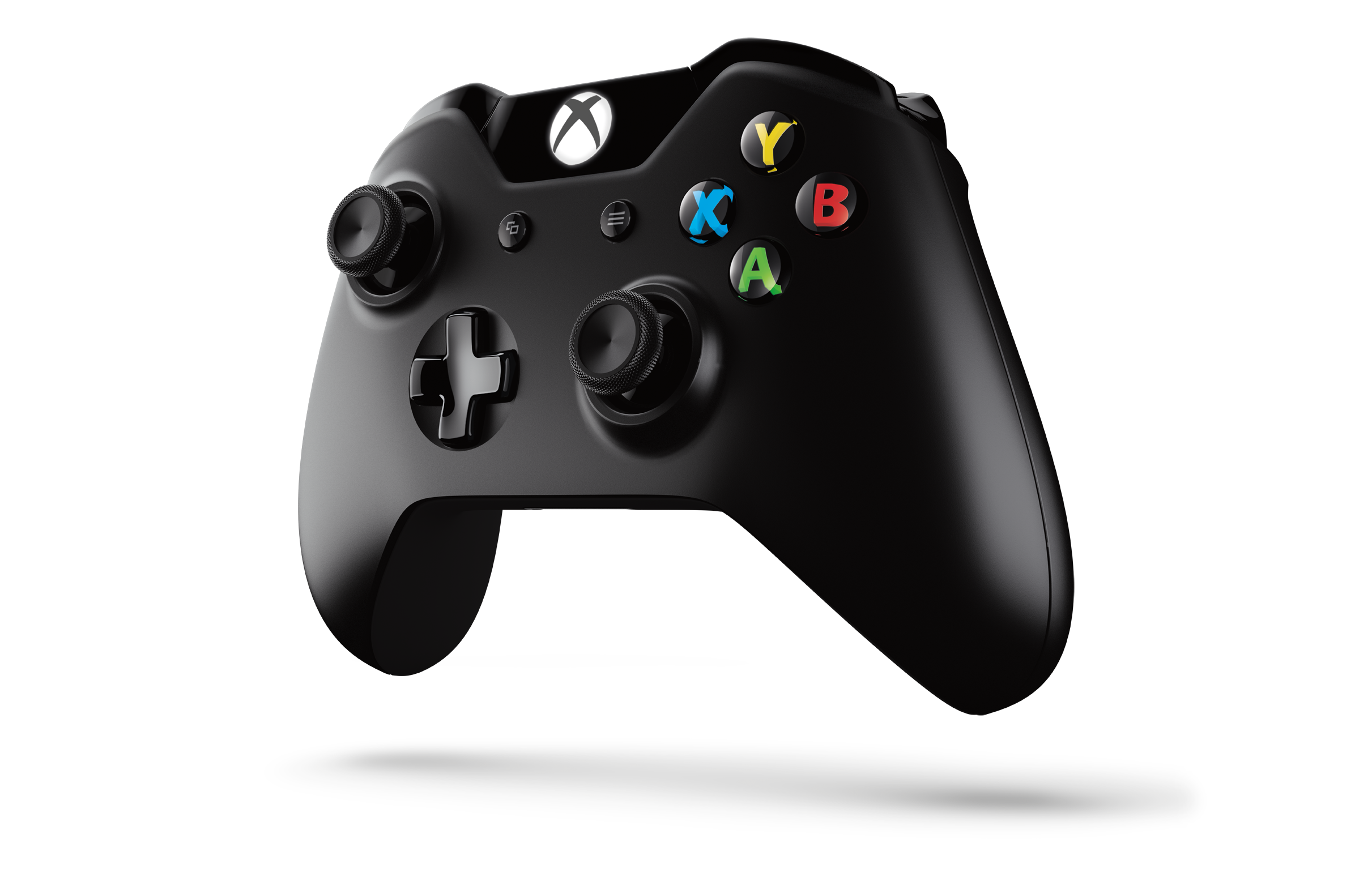
Xbox_Controller_RHS78_TransBG_RGB_2013The new controller looks like the one you know an dlove but has an integrated battery compartment (more like the PS Dual-Shock in terms of creating a slim profile on the back), as well as Wi-Fi Direct and a high precision D-Pad. The new trigger design is supposed to be much more powerful as well.

DVR, CLOUD GAME SAVES AND LIBRARY

New cloud-based features require that the Xbox One’s Live service has 15,000 servers backing it up, and offers a number of features like back up of your media content, games and game saves to the cloud for easy portability. There’s also a DVR function to record game play, and also share save states.
This is likely why the Xbox was said to require a constant Internet connection; it sounds like a lot of the functionality is based in the cloud. Microsoft has said that it doesn’t require the console to be “always on,” specifying that it will be designed to allow you to continue to watch Blu-rays, live TV and even play games should your connection drop.

THE ONE TO WATCH

When Sony unveiled their PlayStation 4, one of my complaints was that it focused too much on games and not enough on becoming more than just a console. Microsoft has taken the exact opposite approach, fielding a device that seems like it would be equally at home in either a hardcore gamer’s, or a non-player’s living room. That should help them deal with a changing gaming industry.
The Xbox One is launching globally “later this year,” but Microsoft didn’t get any more specific or provide an idea of price

Monday, 29 April 2013

Sony Xperia ZL review: Off the bench


Introduction

Having finally scored a homerun, and a desperately needed one at that, Sony is keen to bring another hitter off the bench. And they sure hope it's the Cadillac-driving kind. The Japanese mean business - and the Xperia Z did its best to get that point across. The Xperia ZL now has plenty of momentum to build on but a certain weight of expectations too.
The double-backup is something Samsung has been doing for a couple of years now with a Galaxy S flagship in the spring followed by a Note phablet at the end of summer. Sony's going for what looks more like a one-two punch with the glass-clad, water-proof Xperia Z and the more compact, less extravagant, but just as premium Xperia ZL. The timeframe for their arrival to market has been shortened too - pretty much a must, considering that chipset is only getting older.
   
Sony Xperia ZL
Sony needs users to like the ZL, because the Z probably won't make it on its own. On paper, the Xperia ZL has all the trimmings of its sibling save for the IP57 certification. And it should be just as capable as most other flagships of the latest generation. Here go the specs.

Key features

  • Quad-band GSM/GPRS/EDGE support; 3G with HSPA; LTE
  • 5" 16M-color 1080p capacitive touchscreen of 441ppi, Mobile BRAVIA Engine 2
  • Android OS v4.1.1 Jelly Bean with custom UI
  • Quad-core 1.5 GHz Krait CPU, 2 GB of RAM, Adreno 320 GPU; Qualcomm Snapdragon S4 Pro chipset
  • 13 MP autofocus camera with LED flash and geotagging, HDR
  • 1080p video recording @ 30fps with HDR mode, continuous autofocus and stereo sound
  • 2 MP front camera, 1080p video recording
  • Wi-Fi a/b/g/n, Wi-Fi Direct and DLNA; Wireless TV out
  • GPS with A-GPS, GLONASS
  • 16GB of built-in storage; microSD card slot
  • MHL-enabled microUSB port
  • Bluetooth v4.0
  • NFC
  • Standard 3.5 mm audio jack
  • Accelerometer and proximity sensor
  • Active noise cancellation with dedicated mic
  • Shorter footprint than most 5” smartphones

Main disadvantage

  • Non user-replaceable battery
  • Uninspiring camera performance
  • Notably thicker than Xperia Z
  • Dubious back panel build quality and aesthetics
If you're after a FullHD five-incher the Xperia ZL is the most compact handset that fits the bill. The difference, of course, is by no means huge but having a smaller footprint than the Samsung Galaxy S4 is a great achievement. On the other hand, a 10 mm thick body is nothing to brag about. Yet, if that's the price for getting a proper shutter key and an Infrared port, it should be fine for most people.
Anyway, Sony opted for two distinct versions of a 2013 flagship and then had to sit down and think about how to make them... distinct. Having a more compact option of what's virtually the same package as the flagship makes every bit of sense. But is it worth the extra millimeters around the waistline?
It was probably important to Sony to send a clear message that what's on offer is essentially the same package - the difference boils down to size, choice of finish and waterproofing or not. A sensible plastic case doesn't look half as good as glass but has its advantages. Water resistance is a great asset but not everyone needs it. Plus... a proper shutter key, half press and all, is something we always welcome in a cameraphone.
Sony Xperia ZL Sony Xperia ZL
Sony Xperia ZL at HQ
But will Sony's two-flagship strategy pay off? Can the Xperia ZL coexist with its better-looking, and ultimately more prominent, sibling or is it better off as a regional option? What kind of users do these two have in mind? It's the kind of questions we'll be trying to answer, while we explore the Sony Xperia ZL. Let's get going.

Thursday, 25 April 2013

Facebook Stops Forcing You To Tell Friends When You Claim An Offer


Forced to Talk
Facebook’s gotten into trouble over the years for auto-sharing e-commerce activity. Determined to avoid another Beacon fiasco or scare people away from Offers they don’t want to tell friends about, Facebook now lets you choose to privately claim an offer rather than automatically share the news to friends. Facebook tells me Offers, which let brands post coupons, is getting other new features, too.
Facebook first debuted its Offers product in late 2011 as a replacement for Check-In Deals. Originally, businesses could buy ads or publish Page posts of coupons that you could ask to be emailed. Those emails could be printed out and brought to retail stores for discounts and gifts. Eventually Facebook introduced e-commerce offers that could be redeemed online with a code. Facebook said on its Q4 2012 earnings call that 42 million users have claimed Offers and 100,000 businesses have used the product.
Screen Shot 2013-02-19 at 3.38.53 PM
More recently as spotted by Inside Facebook, the social network has been testing Offers with larger photos, a “remind me” option, and the ability for businesses to send you a reminder to redeem your claimed offer. Now those features are getting an official launch, and more iOS and mobile users will start seeing coupon posts in their news feeds.
Along with bigger images that should entice clicks, you will now see “Shop Now” and “Remind Me” buttons on Offers. Respectively, these direct you to a third-party website where you can redeem your Offer, or let you get details in an email for redemption in the future. All your claimed, redeemed, and expired Offers are now recorded in your private Offers section of Facebook. To make sure you don’t forget about Offers you claimed, businesses now have the option to send you a single Facebook notification linking you back to that Offer.
Screen-Shot-2013-02-15-at-8.30.55-PM1
Most importantly, though, claiming an Offer doesn’t automatically trigger a news feed story shown to friends any more. Previously as soon as you clicked to claim an Offer, your friends would know about it. Now after you click Shop Now or Remind Me, you’ll have a button that lets you share the news of your claim. If you don’t opt in, friends won’t hear about it
That’s useful because maybe you don’t want people to know you’re keen on some discount fast food, or that you’re finally getting around to taking that Rosetta Stone course on Spanish. While viral activity stemming from Offer-claiming is one of the free product’s big selling points to businesses, it clearly pushed users’ privacy limits just a bit too far. If Facebook wants to become a serious player in e-commerce, it has to take advantage of its word-of-mouth factory without making people fear their private shopping habits will end up embarrassing them.

Tuesday, 23 April 2013

Yahoo! Unveils Brand New iOS App, Including Built-In Summly Summaries


yahoo-ios-summly
Yahoo! acquired startup Summly for somewhere around $30 million just one month ago, but it’s already bearing fruit. First, there was the Summly summarized version of its Q1 2013 earnings last week, and now there’s a brand new flagship Yahoo! iOS application out today (for U.S. users only for now) with Summly summaries built right in.
The Summly acquisition attracted a lot of attention, in part because it was helmed by 17-year old Nick D’Aloisio, and because part of its technology was based on a licensing arrangement with SRI, the same company that originally spawned Siri, Apple’s virtual voice-powered assistant software. It’s been speculated that gaining access to that license in part motivated the acquisition.
The app offers Summly summaries of news stories it provides, in a “virtually endless” newsfeed that foregrounds images shown off full-width on the iPhone’s display. Search is said to be improved, both for video and images, and you can drill down to different categories and select topics that interest you, as well as flag those that don’t to make for improved content selection. If you’re logged in with your Yahoo! ID, those choices will also percolate across platforms, meaning you’ll get better results on Yahoo! on the desktop as well as on mobile.
Perhaps the most impressive thing about this new app is the speed with which the Summly integration was achieved. Even if things were rolling behind the scenes before the announcement of the acquisition, the product cycle looks to have been quite short. And Yahoo! has also just delivered completely redesigned weather and mail apps for iPhone and iPad, respectively, making its near-simultaneously launch of this re-imagining all the more impressive. Looks like some of the efforts CEO Marissa Mayer has put in place to focus the team, including the decision to end remote work, have indeed done their job and focused the team.
Yahoo! has previously attempted to deliver personalized news via iOS, with its Livestand app for instance, which aimed to create a custom magazine for iPad users based on their interests. At the time I suggested that Livestand both looked good and had its flaws, but ultimately lacked the brains to go the distance. The Summly ingredient, as well as improvements to personalized recommendations (remember it also picked up Jybe late in March, too, to help with that side of the business), could help make sure this does a better job of attempting what Livestand wanted to accomplish. We’ve also heard from sources close to the project that unlike with Livestand, which wasshut down after less than a year, Yahoo! intends to stick with this app for the long haul.

HTC Now Offers 32GB Unlocked HTC One Via Its Web Store


htc-one-review02
HTC really wants you to buy an HTC One, and it’s making sure that you have every opportunity to do so. First, it opened up pre-orders for the HTC One Developer Edition, a carrier-unlocked 64GB version of the phone with an unlocked bootloader for custom ROMs. Now, it’s also offering a network-unlocked 32GB version of the handset (via Engadget), which doesn’t have the unlocked bootloader, but which is less expensive at $574.99.
Most people definitely won’t miss the unlocked bootloader from the developer version, unless you’re really into tinkering with the core aspects of your device. And the 32GB unlocked HTC One is almost $200 cheaper than the iPhone 5 with equivalent storage unlocked and contract free. Plus, reviews have been very favourable so far for HTC’s latest flagship device, making it arguably the best Android smartphone currently available.
HTC’s sales strategy this time around with the One is a full-court press, with traditional sales via carriers supplemented out of the starting gate with off-contract sales from its own web-based retail presence. By contrast, Apple usually holds its own unlocked device sales until later on, and Samsung usually sticks to carrier routes for selling its own hardware, especially in the U.S.
Why the abundance of buying options for HTC? Simply put, it doesn’t have the luxury of trying to guide buyers to certain channels. Apple and Samsung incur enough demand that it doesn’t matter if there’s necessarily an unlocked option out of the starting gate; people will get a device any way they can, even if it means tying service to a specific carrier. With HTC, however, the onus is on the company to give buyers a reason to part with their money, and making it possible for those shoppers to do so on their own terms is a key part of boosting the HTC One’s appeal.
The HTC One is going to be a strong contender for best smartphone for a while to come, so if you’ve been holding out for a way to pick one up relatively cheaply and without network commitment, this is the way to get it.

The Ressence Type 3 Is The Liquid-Filled Watch Of The Future


Ressence-Type-3-watch-14
Because I like sharing cool watches with you guys I decided to share this cool watch with you guys. It’s called the Ressence Type 3 and it’s actually a liquid-filled mechanical watch with a nearly featureless face. Each of those dials – registers in the parlance – look like they are seamlessly embedded in the face surface and the watch, being suspended in synthetic oil, has no crown and is wound automatically.
Arguably the movement itself isn’t very special – it’s a standard timekeeper that displays the date and includes a rotating seconds wheel – but the way the entire package is put together is a feat of horology. The sapphire crystal surrounds the face almost completely and the back of the watch hides the manual winding mechanism and a switch that allows you to change the time.
On the wrist, the watch looks like a blob of liquid with markings suspended in it. It’s as if you were wearing a slug of liquid metal or a dollop of crude oil. The entire face spins (you can see it in action here) and a pressure valve compensates for temperature-related changes in the liquid.
You can see hands-on photos right here or visit the product page. The watch, sadly, costs $34,000 and comes in a wildly limited edition but it may be worth it just to say that your watch is literally full of alien liquids.

Nest Labs Teams Up With Regional Power Providers For New Energy-Saving Services And Rebates


nest
The Nest thermostat has already gone through a hardware revision or two and found its way onto plenty of physical and virtual store shelves, but parent company Nest Labs is eager to get it into even more households in short order.
The Palo Alto company has just announced that it has teamed up with energy providers from across the country that will see new climate-control services (not to mention some rebates) go live for customers in a handful of markets.
So far, the list of partners includes National Grid, NRG Energy, NRG subsidiaries Reliant and Green Mountain Energy, Austin Energy and Southern California Edison. You can probably guess what markets those last two serve. These newly forged partnerships could see adoption of the household gadget surge — customers who ink deals with National Grid, for instance, can claim a $100 rebate to help defray the costs of a Nest thermostat.
While the others don’t offer much in the way of actual cash back, Nest’s tie-ups emphasize the long-term value of having a Nest over a run-of-the-mill thermostat. The way the folks at Nest look at it, their gadget is only going to become more useful as the days get longer and warmer, and those new services I mentioned earlier should only help matters when it comes to the cost-conscious.
First up is Nest’s so-called Rush Hour Rewards, which are meant to reduce the load on already-strained power stations once it starts getting really hot outside. Rather than cranking the temperature down low and leaving it there as a hapless human might, the Nest instead gets a feel for the sorts of climates its users prefer and will sporadically turn down the temperature to keep things within that preferred range. By occasionally introducing blasts of cold air instead of just leaving things to run at full blast, the Nest can keep your house at about the same temperature as before without much of a corresponding bump on the bill.
Also part of the package is what Nest calls “seasonal savings,” which will see the smart thermostat measure user temperature preferences over the course of the year and make minor modifications over the course of a few weeks. The idea is to reduce a user’s heating bill by carefully acclimating them to a new, more cost-efficient temperature scheme without the residents even noticing.
For now, only customers who select certain plans with those power companies can use these new services, but I very much doubt that team Nest is content to leave things as they are. These sorts of deals will only serve to raise the company’s profile, and buy-in from power partners is a big deal for Nest especially as the company’s rivals have moved to make their own wares smarter. Consider Honeywell: it already filed a lawsuit against Nest last year for supposed acts of copyright infringement, an allegation that Nest Labs vigorously disagrees with. Meanwhile, the conglomerate is gearing up to release a rather handsome smart thermostat of its own, so deals like these could help Nest stay a step ahead of the pack.